Mileage Tracker App for Gig Workers
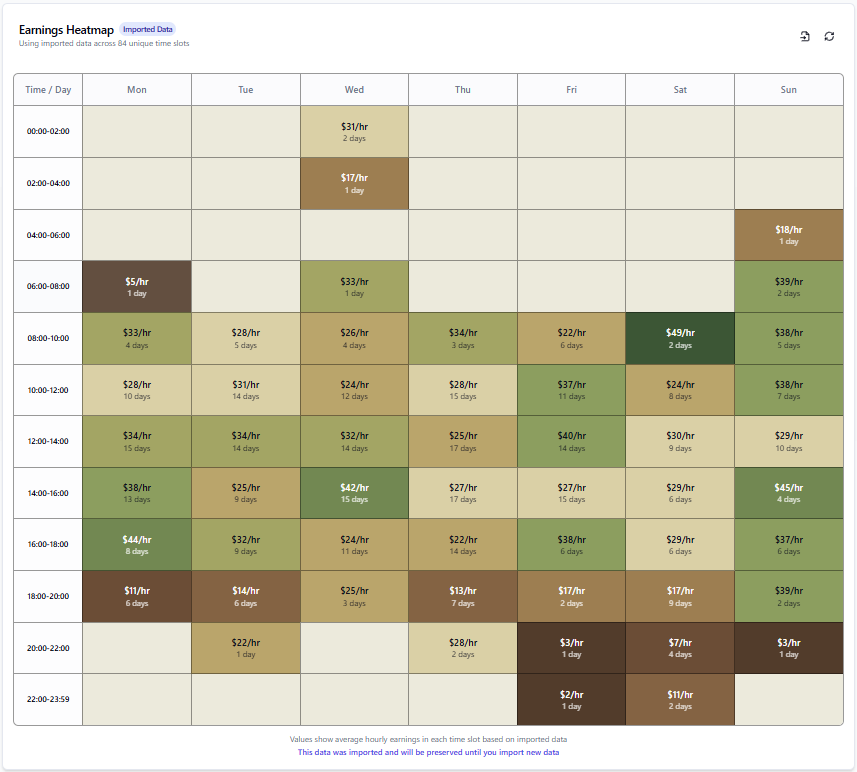
ShiftTracker is the odometer-based mileage tracker app built for gig workers. Log your business miles across DoorDash, Uber, Lyft, Instacart, and more in seconds — and see exactly how each mile cuts your tax bill and shapes your real hourly rate.
Last reviewed July 1, 2026 · By Brenden Warn, ShiftTracker founder — Lime LP for almost 4 years · 42,000+ tasks completed.
Why a gig worker needs a mileage tracker app
Mileage is the single largest tax deduction most gig workers have — and an easy one to under-claim. At the 2026 IRS standard mileage rate of $0.76 per business mile from July 1 ($0.725 for January–June) (IRS standard mileage rates), a driver logging 20,000 business miles split evenly across the year deducts $14,850 ((10,000 × $0.725) + (10,000 × $0.76)) from taxable income — roughly $5,300 in federal tax savings in this example (22% federal bracket plus the self-employment tax).
The problem: notebooks and spreadsheets get abandoned after a long shift, and estimating miles in April is exactly what gets deductions thrown out in an audit. A good mileage tracker app fixes both — it captures every business mile in the format the IRS actually wants, and ties those miles to your earnings so you can see your true hourly rate after costs. Miss 10% of your miles and you hand the IRS about $540 a year that was yours to keep.
Odometer-based tracking beats GPS auto-tracking
Most mileage tracker apps (MileIQ, Everlance, Hurdlr) run a second always-on GPS in the background to auto-detect trips. For a gig worker, that's the wrong trade: your gig apps already run GPS all shift for routing, so stacking another one drains your battery when you can least afford it. ShiftTracker takes the opposite approach — you enter your odometer reading at the start and end of each shift, and it calculates your deductible business miles. It takes seconds, costs no battery, and produces the exact record IRS Publication 463 asks for.
| GPS auto-trackers | ShiftTracker (odometer) | |
|---|---|---|
| Battery | Second always-on GPS all shift | No extra GPS — seconds per shift |
| IRS format | GPS-trace log (not the requested format) | Odometer readings — exact Pub 463 format |
| Privacy | Continuous location tracking | No continuous location tracking |
| Earnings view | Miles only | Miles + real hourly rate in one app |
Why the IRS prefers it: Pub 463 lists odometer readings as the canonical log format; a GPS trace is evidence of driving but not the record the publication asks for.
One mileage tracker for every gig app — and every vehicle
Gig work is rarely one app or one car. ShiftTracker is built for multi-appers and delivery drivers who bounce between platforms and sometimes swap vehicles mid-week. Every business mile is deductible no matter which app was active, and because the IRS treats each vehicle separately, ShiftTracker keeps a distinct odometer log per car while rolling everything into one Schedule C summary at tax time.
Whether you drive rideshare, deliver food, or shop groceries, the log format is the same and the deduction is the same — the IRS rate for the date you drove ($0.725 through June 30, $0.76 from July 1, 2026). See the full picture in our gig worker mileage & tax deductions guide.
How ShiftTracker logs your miles
- 1. Start your shift: enter your odometer reading (a few taps) and tag the app + vehicle you're driving.
- 2. End your shift: enter the ending odometer. ShiftTracker calculates the business miles for that shift automatically from the two readings.
- 3. See the money: it shows total miles, miles per shift, and miles per dollar earned — then exports an IRS-ready log and a Schedule C summary at tax time.
No second GPS running all day, no continuous location trail — just the audit-defensible numbers the IRS wants, in the time it takes to read your dash. Estimate what it's worth with the mileage tax calculator.
What tracking every mile is actually worth
Say you drive 30 hours a week across DoorDash and Uber and log about 350 business miles a week — roughly 18,000 business miles a year:
- • Deduction: (9,000 × $0.725) + (9,000 × $0.76) = $13,365 off your taxable income (2026 rates, miles split evenly across the year).
- • Tax saved: roughly $2,000–$3,200, depending on your bracket, across income + self-employment tax.
- • The catch: that's only true if you have the records. No log, no deduction.
Run your own numbers with the 1099 tax calculator, or compare the two IRS methods in mileage vs. actual expenses. For the year-by-year rates, see our historical IRS mileage rates.
Frequently asked questions
What is the best mileage tracker app for gig workers in 2026?
How much can a mileage tracker app save gig workers in 2026?
Does ShiftTracker run continuous GPS in the background?
Why does the IRS prefer odometer readings over GPS logs?
Can I track mileage for DoorDash, Uber, and Instacart in one app across multiple vehicles?
Start tracking every mile
Join thousands of gig workers maximizing their tax deductions and understanding their true earnings with ShiftTracker's odometer-based, battery-friendly mileage tracking.


Related from the Blog

Best Mileage Tracker Apps for Gig Workers (2026)
Compare the best mileage tracker apps for gig workers to maximize tax deductions, simplify IRS compliance, and increase net earnings.
Delivery Driver Mileage: IRS Rules, Best Apps & Tax Deductions
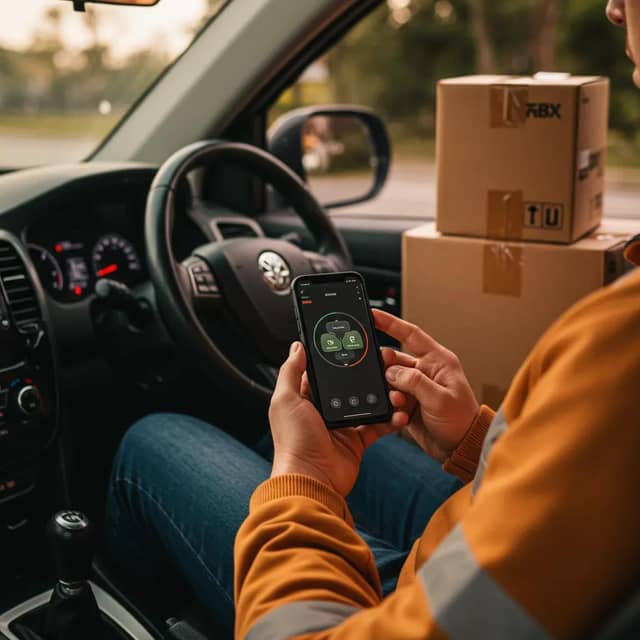
The 2026 IRS mileage rate is split mid-year - $0.725 a mile through June, $0.76 from July 1 - so a flat annual estimate is wrong by construction. Here is what a compliant log needs, and how to choose a mileage app that produces one.
Gig Tax Deductions 2025: Maximize Mileage & Expenses
Learn which gig expenses are deductible in 2025, how the mileage rate works, and how Shift Tracker automation prevents missed write-offs and audits.
