Work-Life Balance for Gig Workers
Irregular hours and fluctuating pay make balance difficult. This guide shows how to use data from ShiftTracker to plan sustainable schedules that protect income and prevent burnout.
Why Work-Life Balance Is Hard in Gig Work
Unlike traditional employment with set schedules, gig work offers unlimited flexibility -- which can quickly become a trap. Without guardrails, it's easy to overwork.
Unpredictable Demand
Surge times and high-demand periods create pressure to work whenever possible, disrupting personal plans.
No Built-In Days Off
You have to actively choose to take breaks -- there's no mandatory weekend or vacation policy.
Income Pressure
Variable pay means you're constantly tempted to work more hours to hit financial goals.
Use Data, Not Guesswork, to Plan Your Week
ShiftTracker helps you identify your highest-earning time blocks so you can focus on working smarter, not just longer.
How ShiftTracker Supports Balanced Planning:
Weekly Summary Views
See total hours, income, and mileage for the full week. Compare against your target to know if you're on track without overworking.
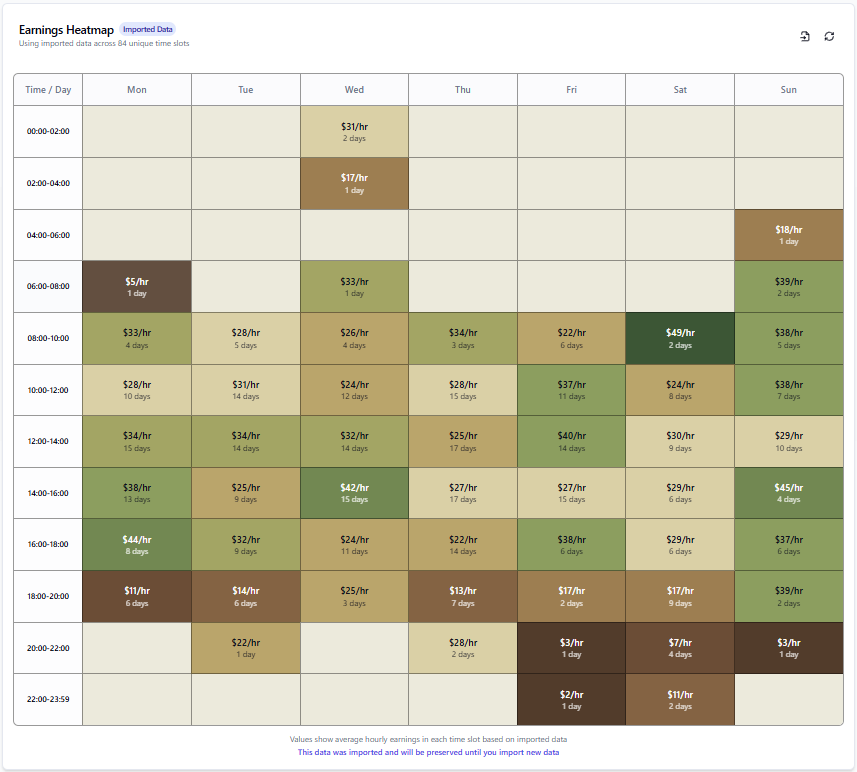
Time Block Analysis
Identify "high-yield" blocks (e.g., Friday dinner rush) vs "low-yield" blocks (e.g., Tuesday midday). Focus energy on profitable times.
Days Left This Week
Track goal progress throughout the week. If you're ahead, take a planned day off. If behind, add one strategic shift.
Want to dive deeper into earnings optimization? Check out our gig worker earnings analytics page.
Set Guardrails Around Hours and Recovery
Sustainable gig work means protecting your long-term earning capacity. Burnout doesn't just hurt your mental health -- it directly reduces your hourly rate as fatigue sets in.
Weekly Max Hours
Set a target like 40-50 hours per week. ShiftTracker tracks total weekly hours so you can see when you're pushing too hard.
Max Consecutive Days
Aim for at least one rest day after every 5-6 work days. Use your weekly view to plan mandatory breaks.
Example Weekly Schedule for Full-Time Gig Workers
A realistic weekly schedule that balances income goals with recovery time. Adjust based on your market and personal needs.
Monday, Wednesday, Thursday
Main Driving Days: 10am-2pm (lunch rush), 5pm-9pm (dinner rush)
~8 hours each day | Focus on high-yield time blocks
Friday, Saturday
Peak Weekend Days: 11am-2pm, 5pm-10pm
~9 hours each day | Higher demand = better hourly rates
Tuesday
Lighter Backup Day: Work only if behind on weekly goal
Flexible 4-6 hours | Optional based on week progress
Sunday
Protected Recovery Day: No gig work scheduled
Full day off for rest, errands, and personal time
Total: ~45-50 hours per week with one guaranteed recovery day.
Build a Sustainable Gig Work Routine
ShiftTracker gives you the data you need to plan smarter schedules that protect both your income and your long-term well-being.
Use ShiftTracker to Plan SmarterAlso explore: Mileage Tracker · Pricing · Features
