How Do Lime Scooters Work? The Complete 2026 Insider Explainer
The Short Answer
- Lime scooters are dockless e-scooters unlocked through the Lime app and billed per minute after an unlock fee.
- Batteries are swappable. Operators carry charged batteries and swap the depleted one at the scooter — scooters are no longer taken home to charge.
- Fleet work is contracted through Logistics Providers (LPs), who handle charging at their own facility or via a Lime corporate warehouse.
- The work appears as a 24/7 task map with five task types: swap, move, deploy, service and retrieve.
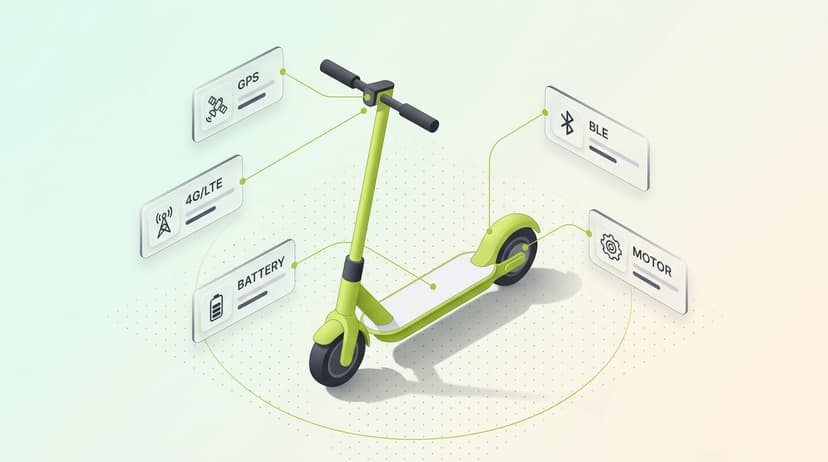
- Each scooter is an IoT device with GPS, cellular connectivity and onboard diagnostics that report its location and battery state continuously.

See your real hourly rate after car costs.


Table of Contents
Updated August 2026 — the model has changed. Lime no longer signs up individual juicers, scooters are no longer taken home to charge, and there is no overnight harvest-and-serve window. Work is now contracted through Logistics Providers (LPs), batteries are swapped in the field, and the task map runs 24/7. Full explanation of what changed.
Bottom line up front: Lime scooters work through a four-part system most riders never see: a GPS-connected electric scooter that riders unlock via the Lime app, a fleet of independent contractors and the operators they contract with, who swap depleted batteries in the field, a deployment system that places charged scooters at high-demand morning locations, and a maintenance pipeline that swaps batteries and replaces parts. This guide explains each part of the system in plain English, written from someone who actively works the juicer side of it.
What Is Lime, Exactly?
Lime is a shared electric mobility company founded in 2017 that operates fleets of e-scooters and e-bikes in cities around the world. In the US, you'll find Lime scooters in major metros like San Francisco, Washington DC, Portland, Austin, Seattle, Denver, Chicago, and dozens of mid-size cities. Riders unlock individual scooters via the Lime smartphone app and pay per minute or per ride.
The full ecosystem extends well beyond the scooters themselves. Lime maintains city-level operations partnerships, charging infrastructure (some markets have dedicated LimeHubs), the Logistics Provider network for fleet management, and a back-end platform that handles GPS tracking, ride payments, geo-fencing rules, and customer support.
How Do You Ride a Lime Scooter? The Consumer Side
From a rider's perspective, the process is intentionally simple. Unlocking a Lime scooter takes under 30 seconds and the actual ride feels close to a kick scooter with a quiet electric motor.
- Open the Lime app and find a scooter on the map. Available scooters appear as green pins. Each one shows a battery percentage and an estimated remaining range based on that charge.
- Walk to the scooter and scan the QR code. The QR code is on the handlebar stem. Once scanned, the scooter unlocks and the rear wheel disengages.
- Kick off and press the throttle. Lime scooters require a kick-start to begin moving (a safety feature to prevent unintended acceleration). Once you're moving above ~3 mph, the throttle on the right handlebar engages.
- Ride within designated areas. The Lime app shows ride-allowed zones, slow zones (where the scooter limits to ~10 mph), and no-ride zones (where the motor disables entirely).
- End the ride at a permitted parking location. Riders must park in designated zones (varies by city). Some cities require a parking-photo verification before the ride ends.
Cost depends on the city and time of day, and is usually an unlock fee plus a per-minute rate. Lime also offers Lime Pass subscription pricing in many markets that reduces per-minute costs in exchange for a daily or weekly fee.
How Do Lime Scooters Charge? The Battery System Explained
Each Lime scooter contains a removable lithium-ion battery pack, and capacity depends on the generation. Real-world range drops in cold weather, hilly terrain, or under heavier riders.
Lime scooters do not charge themselves through solar or kinetic energy. They have no plug-in chargers built into city infrastructure (with rare exceptions for LimeHub-equipped markets). The battery drains during use until it falls below an operational threshold, at which point Lime's system flags the scooter as needing collection. Two systems then handle recharging:
- The Juicer program (most common in US markets): Independent contractors pick up low-battery depleted batteries in the field and swap in charged ones, then move, deploy, service or retrieve scooters as tasks appear.
- Lime in-house operations teams (smaller fleets in select cities): Lime employees collect and charge scooters at centralized warehouses. This model has been scaling back in favor of the contractor-driven Juicer program in most US markets.
From a rider's perspective, this means the scooter you unlock at 8 AM was almost certainly picked up by a juicer the previous night, charged in someone's garage, and dropped at that location 2–3 hours before you found it.
Who Keeps the Fleet Running?
Scooters do not disappear at night any more. Lime contracts Logistics Providers — independent businesses that run fleet operations in a market — and they, plus the operators they contract with, keep the fleet charged, positioned and serviced around the clock.
The work shows up as a live task map: swap a depleted battery, move a scooter, deploy scooters into the market, service one in the field, or retrieve one. Tasks are available whenever they appear rather than in an overnight window.
How Do Lime Scooters Get Charged?
They do not get charged at anyone's home — that model has been retired. Lime scooters take swappable batteries. An operator carries charged batteries in their vehicle and swaps the depleted one at the scooter, in the street, in a couple of minutes.
The batteries themselves are charged centrally: at the Logistics Provider's own facility in larger markets, or at a Lime corporate warehouse in smaller and seasonal ones. Where it is a corporate warehouse, batteries can only be collected during business hours — which is a real constraint on how much swapping can happen in that market.
How Do Lime Scooters Know Where to Be in the Morning?
Lime's deployment system is one of the more sophisticated parts of the platform. Each morning, the Juicer app generates city-specific deployment zones based on historical demand data, current weather, and local event schedules. Juicers cannot drop scooters anywhere — only at app-approved deploy zones, each marked with GPS boundaries.
The system optimizes for three factors:
- Morning commuter density. Transit stops, business districts, and popular retail corridors get the most scooters dropped. The app awards the highest morning-serve bonuses to juicers who deploy at top-priority zones.
- Geographic distribution. Lime's algorithm prevents over-saturation in any single zone — once a location has its target scooter count, the bonus drops or the zone disappears entirely from the deploy map.
- Anticipated daily demand. Cities with major events (concerts, sports games, conferences) see deploy zones shift to anticipate evening demand spikes near the venue.
This is why Lime scooters appear at remarkably similar locations day after day — the algorithm reinforces the patterns that produce the most rides per scooter per day. For deeper analytics on these patterns from a juicer's perspective, see our guide on using weekly Lime analytics to maximize earnings.
What Technology Powers Lime Scooters?
From the outside, a Lime scooter looks like a basic kick scooter with a battery and motor. Internally, it's a connected IoT device with several integrated technologies that make the rental model possible.
- GPS module: Reports the scooter's location every few seconds when in motion or every several minutes when parked. Used for ride tracking, geo-fencing enforcement, and post-ride parking verification.
- Cellular modem: Each scooter contains a cellular SIM card (typically 4G/LTE) that connects to the Lime back-end without needing nearby Wi-Fi. This is how the scooter knows it's been unlocked even though you're standing next to it with no Wi-Fi.
- Bluetooth Low Energy: Used for the initial unlock handshake between your phone and the scooter when you scan the QR code.
- Accelerometer + gyroscope: Detects falls, sudden stops, and tipping. Lime uses this data to flag damaged scooters and to disable scooters that have been knocked over.
- Wheel speed sensors: Enforce slow zones (the motor automatically caps speed when the scooter enters a zone marked as slow on the city's map).
- Battery management system (BMS): Monitors cell health, prevents overcharging, and reports battery percentage to the app.
This is also why a Lime scooter you find sitting on the sidewalk can be remotely disabled, unlocked, throttled, or activated — the scooter is constantly in two-way communication with Lime's servers.
How Does Lime Make Money?
Lime's business model has evolved significantly since 2017. As of 2026, the company generates revenue through four primary streams:
- Per-minute and per-ride fees from consumers: The largest revenue source. Riders typically pay an unlock fee plus a per-minute rate, and prices vary by city.
- Lime Pass subscriptions: Discounted ride pricing for users who pay a daily, weekly, or monthly fee. Reduces consumer per-ride costs while smoothing revenue for Lime.
- Charging surcharges and rebalance fees: Some city contracts include performance bonuses for placing scooters in underserved areas.
- City partnerships and data licensing: Some municipalities pay Lime for ride pattern data used in transportation planning.
Lime's costs are dominated by the Logistics Provider network (paying Logistics Providers for fleet tasks), maintenance and parts replacement, fleet expansion in new cities, and back-end infrastructure (cellular data plans for every scooter add up quickly at fleet scale). Lime reported its first full profitable year in 2022, with adjusted EBITDA profitability of $15 million, and $84 million of adjusted EBITDA in the second quarter of 2026.
How Do Lime Scooters Get Serviced When They Break?
Lime scooters experience meaningful wear from daily public use — flat tires, broken brake levers, malfunctioning displays, and battery degradation are routine. The maintenance pipeline runs separate from the juicer charging program and uses dedicated mechanics in city-specific operations facilities.
When a scooter breaks (or a rider reports a problem in the app), the workflow looks like this:
- The scooter is flagged as "out of service" in the back-end and disappears from both the consumer and juicer maps.
- A dedicated Lime operations driver (employee or contractor) collects the broken scooter and transports it to the nearest Lime warehouse.
- An on-site technician diagnoses the issue and either repairs the scooter, swaps the affected component, or replaces the battery pack.
- Once repaired and recharged, the scooter is redeployed to the street and reappears on the consumer map.
Lime designs its current scooter generation specifically for serviceability — the battery, motor, controller, and display can each be swapped without specialized equipment. This is a major change from earlier generations (~2018–2020) when broken scooters were often disposed of rather than repaired.
Frequently Asked Questions
How do Lime scooters get charged?
Lime scooters use swappable batteries. An operator carries charged batteries in their vehicle and swaps the depleted one at the scooter, in the street. The batteries are charged centrally - at the Logistics Provider's own facility in larger markets, or at a Lime corporate warehouse in smaller and seasonal ones. Nobody charges scooters at home any more.
Can I charge a Lime scooter at home?
No. The home-charging model has been retired, and it is not how the fleet is maintained. Batteries are swapped in the field and charged centrally by the Logistics Provider or at a Lime corporate warehouse.
Who keeps Lime scooters charged and positioned?
Lime contracts Logistics Providers - independent businesses running fleet operations in a market - and they, plus the operators they contract with, handle it. The work appears as a live 24/7 task map with five task types: swap, move, deploy, service and retrieve.
How do Lime scooters know where to be?
Lime's platform assigns deploy and move tasks to place scooters where demand is expected. Operators pick those tasks off the map and reposition scooters accordingly, rather than working to a fixed morning deadline.
Can I get paid to work on Lime scooters?
Yes, but not by signing up with Lime directly. You contract with a Logistics Provider in your market as a business - which means a registered entity, your own general liability insurance and a vehicle with room for batteries. Lime sets each task's price.
From the founder
Ready to run Lime juicing like a business?
Two ways forward — the field guide that teaches the system, or a 1-on-1 audit that applies it to your specific market. Built from 42,000+ Lime tasks and almost 4 years as a Lime LP.
Micromobility Operator Manual
PDF field guide, worksheets, route-planning checklists. Includes a $30 credit toward a future audit.
$30
Get the manual →1-on-1 Operator Profit Audit
60-min consultation with Brenden. Task-map review, market analysis, 2-3 page custom action plan.
$300
Book an audit →Founder of ShiftTracker. Lime LP for almost 4 years · 42,000+ tasks completed. Background in financial trading and behavioral optimization.
You Might Also Like
Is GoShare Worth It for Drivers in 2026?
GoShare lists five driver tiers from $46 to $188 an hour, and every one is worded “average earnings ...
Uber Black, Premier and SUV Vehicle List 2026
Uber does not publish a national Uber Black vehicle list, and says outright that a model on the list...
Is Veho Worth It for Delivery Drivers in 2026?
Veho tells prospective delivery drivers they average $20-26 an hour, then says on the same page that...