Walmart Spark Driver Guide 2026: How to Sign Up, Pay Per Delivery + Real Earnings
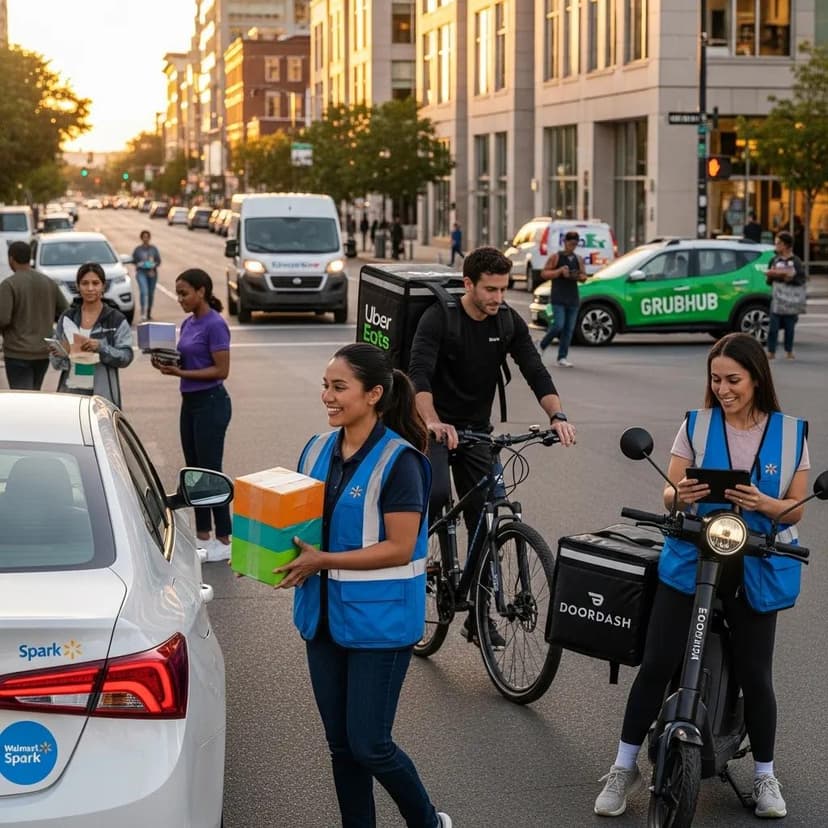
The Short Answer
Walmart Spark drivers earn between $12 and $20+ per order in 2026, with base pay set by Walmart's algorithm based on order size, distance, and complexity — not a flat rate.
Spark requires a minimum 4.7-star rating and currently enforces acceptance rate monitoring, with drivers showing pattern of low acceptance rates potentially losing access to high-value orders.
The Spark Driver app received major 2026 updates including improved order stacking in select markets, better navigation integration, and a revamped earnings dashboard showing per-hour rate.
Grocery and general merchandise orders typically pay more per mile than pharmacy or small-item runs — batch orders and larger cart orders are consistently the highest-value assignments.
Multi-apping alongside Spark is common but risky during peak windows — drivers who dedicate peak hours exclusively to Spark consistently report higher per-hour earnings than those splitting attention across apps.

See your real hourly rate after car costs.


Table of Contents
Walmart Spark has grown into one of the most reliable income sources for gig delivery drivers, especially in suburban and rural markets where DoorDash and Uber Eats volume is thinner. In 2026, the platform has made notable changes to its app, pay structure, and driver requirements that every active Spark driver needs to know.
This guide covers current 2026 pay rates, updated requirements, the latest app features, and the strategies that experienced Spark drivers actually use to earn more per hour.
Walmart Spark Pay Rates in 2026: What You Actually Earn
Spark base pay ranges from $12 to $20+ per order in 2026. That's a wide range, and the algorithm behind it matters a lot for your strategy.
Base pay is set by Walmart's dispatch algorithm, factoring in:
- Order size: Larger grocery hauls with more items pay more
- Distance: Longer deliveries get higher base pay, but not always proportionally
- Complexity: Multi-stop and batch orders pay premiums
- Demand surge: Peak windows (weekend mornings, evenings) see higher base rates in many markets
Tips are separate. Customers tip through the Walmart app, and drivers keep 100%: no platform cut. In practice, tips depend on order size and customer generosity. Gridwise puts the median Spark tip at $2.64 per task (2025 data).
Hourly pay swings between busy peak windows and slow weekday middays, which is why order selection matters.
Spark Driver Requirements in 2026 — What's Changed
The core requirements remain the same: 18+, valid U.S. driver's license, reliable vehicle, smartphone, and a background check clearance. But 2026 brought tighter enforcement of performance metrics.
Current Spark requirements:
- Age 18 or older
- Valid U.S. driver's license
- Car, SUV, minivan, or truck (no motorcycles for standard grocery delivery)
- Insulated bags or coolers for refrigerated items (Spark provides these in some markets)
- Background check clearance (processed through Checkr)
- Minimum 4.7-star customer rating to maintain full access
- Consistent engagement with offered orders (see acceptance rate section below)
Background Check Details
Spark uses Checkr with a 7-year lookback period for most violations. Disqualifying factors typically include felony convictions, DUI within the past 5 years, and certain moving violations within the past 3 years. The background check itself takes 3–5 business days; full activation including onboarding modules usually lands within 5–10 business days from application.
One notable 2026 update: Spark now requires drivers to confirm delivery with photos on a higher percentage of orders. The photo confirmation requirement expanded across more market categories. Skipping photo confirmation counts against your reliability score.
How to Sign Up for Walmart Spark Driver: Step-by-Step
The application takes about 20 minutes to complete. Approval typically lands in 2-7 business days after submission.
- Download the Spark Driver app from the App Store (iOS 14+) or Google Play (Android 5.0+).
- Create an account with your email and a secure password.
- Enter your personal information: legal name, date of birth, address, and Social Security Number for tax reporting.
- Upload your driver's license (clear front and back photos).
- Submit insurance documentation: a photo of your current insurance card is sufficient. Standard personal auto insurance is accepted; no rideshare endorsement is required for delivery work.
- Consent to the Checkr background check. Spark uses Checkr for criminal and driving record screening.
- Wait for approval. You will receive an email and in-app notification once cleared.
If your zone shows as "at capacity," you will be placed on a waitlist. Waitlists are more common in dense urban markets and less common in suburban or mid-size cities. Check back monthly. Spots open as demand grows or inactive drivers are removed.
Acceptance Rate Policy in 2026 — The Real Situation
Spark doesn't publish a hard acceptance rate cutoff. But the pattern is clear: drivers who decline frequently (especially high-value orders in their zones) get deprioritized in the offer queue.
The practical 2026 approach most experienced Spark drivers use:
- Accept most orders at or above your minimum dollar-per-mile threshold: typically $1.50+ per mile as a rough filter
- Decline consistently low offers (sub-$13 on a 7-mile run, for example) without guilt, since the algorithm expects some declining
- Never decline a batch order if the combined pay is reasonable. Batch orders are Spark's premium assignments
The key insight: your acceptance rate matters most relative to other drivers in your zone. Spark fills orders from its available driver pool. Being present and engaged during peak windows matters more than your raw acceptance percentage.
Compare this to Walmart Spark vs. Instacart's pay models in our Spark vs Instacart full comparison.
2026 Spark Driver App Updates — What's New
The Spark Driver app saw meaningful updates in late 2025 and early 2026:
- Order stacking in select markets: Drivers in pilot markets can now accept up to two orders simultaneously when routes overlap, similar to DoorDash's Double Dash. This is rolling out gradually and may not be available in your market yet.
- Improved navigation integration: The app now offers better handoff to Waze and Google Maps with pre-loaded delivery addresses, reducing the time spent on address lookup and manual entry.
- Revamped earnings dashboard: The new dashboard shows your per-hour rate for the current shift and weekly trend data directly in the app, something drivers previously had to calculate manually.
- Photo confirmation expansion: Required for more order types. Drivers who complete photo confirmations promptly score higher on reliability metrics.
Spark drivers earn a median of $21.74 per hour in total trip pay, based on 2025 earnings data from more than 500,000 drivers. Earnings vary by market and time of day, so your own numbers matter more than the median.
Source: Gridwise, How Much Do Spark Drivers Make?, 2025 data
How to Maximize Spark Earnings in 2026
The drivers who consistently earn more per hour on Spark in 2026 share a few common strategies:
Work the Right Windows
Order volume on Spark is predictable by day and time. These patterns hold across most suburban and urban markets:
- Saturday 9am–1pm: Highest weekly order volume; tip averages peak here
- Sunday 10am–2pm: Second-highest volume; strong for Walmart+ customers picking up weekly orders
- Weekday lunch 11am–1pm: Reliable mid-day burst; good for part-time drivers
- Friday evenings 4pm–8pm: Strong in markets with high Friday grocery traffic
- Holiday weeks: Thanksgiving week and the two weeks before Christmas are the highest-earning period of the year for Spark drivers
Log into the app 15 minutes before your target window starts. Drivers already in the queue when orders drop get first access. Late arrivals often find the best orders already claimed.
Prioritize Large Grocery Orders Over Small Runs
A small pharmacy run for $12 that takes 35 minutes pays worse per hour than a $19 grocery order that takes 40 minutes. Learn to eyeball order complexity in the offer screen: more items and a higher total value typically signal a better-tipping customer.
Know Your Best Walmart Stores
Not all Walmart locations generate the same order quality. Supercenter locations generate more full-grocery orders than Neighborhood Market locations. Identify the 2-3 stores in your market with the best order mix and position near them during peak hours.
Track Your Per-Order Earnings, Not Just Totals
Many Spark drivers track weekly totals but miss the inefficiencies at the order level. Knowing your average earnings per order (and which order types underperform) lets you decline more precisely. Log your earnings by shift and order type to build this picture over 2-3 weeks.
See the strategies used by top earners in our Walmart Spark pro workflows guide and compare with other high-paying platforms in our 2026 highest-paying gig apps ranking.
Mileage and Taxes: What Spark Drivers Must Track in 2026
Walmart Spark pays no mileage reimbursement. Every mile you drive (to the store, to the customer, back to your zone) is your cost. At the 2026 IRS rates (72.5 cents per mile January 1 to June 30, 76 cents from July 1; IRS), proper tracking turns your vehicle costs into a major deduction.
If you drive 800 miles per month for Spark (about 200 miles per week), that's 9,600 miles a year, or about $7,128 in mileage deductions at the 2026 rates (4,800 miles at 72.5 cents plus 4,800 miles at 76 cents). Most Spark drivers also qualify for the phone deduction (business-use percentage), platform-related supplies, and insulated bags.
Spark issues a 1099-NEC if you earn $2,000 or more in a calendar year (the threshold was $600 before 2026; IRS). All your earnings are taxable as self-employment income, and all your deductible expenses offset that tax bill. Keep records from your first delivery. See our full guide to gig worker tax prep and deductions for the complete list.
Frequently Asked Questions
How much do Walmart Spark drivers make per order in 2026?
Spark drivers earn $12–$20+ per order based on size, distance, and complexity. Tips are kept 100% by drivers and add significantly to totals on larger orders. Weekends and weekday evenings tend to deliver the highest combined earnings.
What are the requirements to become a Walmart Spark driver in 2026?
Requirements: age 18+, valid U.S. driver's license, reliable vehicle, smartphone with Spark Driver app, and a background check through Checkr. You must maintain a 4.7-star rating minimum and complete photo confirmations on deliveries. Background checks typically clear within 2-5 business days after submission.
Does Walmart Spark have a minimum acceptance rate?
Spark does not publish a hard acceptance rate cutoff, but drivers who decline frequently (especially high-value orders) report being deprioritized in the offer queue. The practical standard is to accept most orders meeting your minimum dollar-per-mile threshold while declining consistently low-value runs without worrying about the precise percentage.
What is new with the Spark Driver app in 2026?
Key 2026 updates include order stacking in pilot markets (accepting 2 orders simultaneously), improved Waze/Google Maps navigation handoff, a revamped earnings dashboard showing per-hour rate in real time, and expanded photo confirmation requirements across more order types. The stacking feature is the most impactful for high-volume drivers.
Does Spark Driver have a tipping cap?
No. Unlike some other gig platforms, Spark Driver does not cap customer tips. Tips are processed through the Walmart app and paid out within the standard payment cycle.
Can you do Spark Driver with an SUV or truck?
Yes. Any personal vehicle with sufficient cargo space works. SUVs and trucks are well-suited for large grocery orders. There is no vehicle age requirement, though your personal auto insurance must be current.
Is Walmart Spark worth it compared to DoorDash?
Spark typically pays better per order than DoorDash in suburban and rural markets due to larger grocery order sizes and strong customer tipping habits. DoorDash has higher volume in dense urban areas. Many drivers run both (DoorDash for volume, Spark for higher-value individual orders) and switch based on real-time conditions in their market.
Founder of ShiftTracker. Lime LP for almost 4 years · 42,000+ tasks completed. Background in financial trading and behavioral optimization.
You Might Also Like
Is GoShare Worth It for Drivers in 2026?
GoShare lists five driver tiers from $46 to $188 an hour, and every one is worded “average earnings ...
Uber Black, Premier and SUV Vehicle List 2026
Uber does not publish a national Uber Black vehicle list, and says outright that a model on the list...
Is Veho Worth It for Delivery Drivers in 2026?
Veho tells prospective delivery drivers they average $20-26 an hour, then says on the same page that...